Working together
How it works, from brief to delivered files
Four steps, one contact person and nothing delivered without your review. Here is what each step needs from you, and what you get back.
Four steps
From your brief to the files.
-

Send what you have.
A brief, a script, notes, a deck or a recording, plus who it is for and where it will appear.
- You
- The material, the audience and the channels.
- We
- Questions, if anything is missing, then a proposal.
-
Agree the approach.
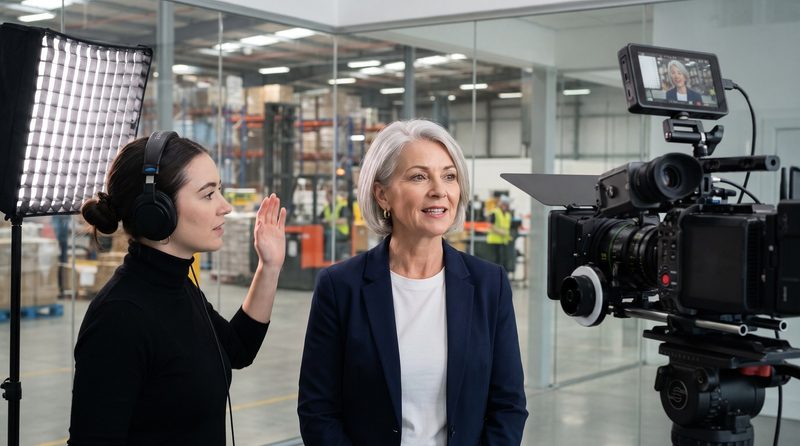
Format, voice, languages and timeline. Directed AI, professional voice talent or your own people.
- You
- Approval of the scope.
- We
- The approach and the timeline in writing.
-

Review the pieces.
You hear and see everything before delivery. Review rounds are agreed with the scope.
- You
- Comments within the agreed rounds.
- We
- Every piece to hear and watch, and the changes made.
-
Receive the files.
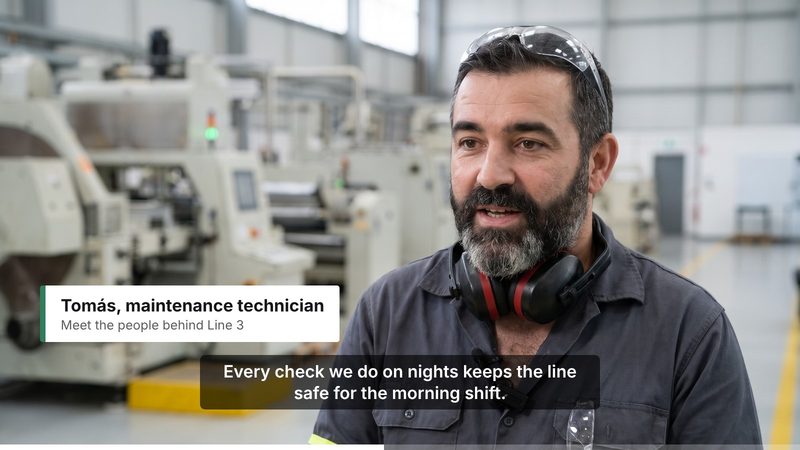
The agreed versions, ready for each channel and language.
- You
- The final sign-off.
- We
- Files named by channel and language, plus the master for future edits.
What changes the timeline.
Every project is planned by scope. These are the things that move the timeline, so you can decide what matters before you ask.
- Format and lengthAn audio update is a different job from a filmed story with three cuts.
- Filming or notWorking from your footage or a remote recording is lighter than a shoot on site.
- Voice approachYour own people, professional voice talent or a directed AI voice.
- LanguagesEach language version adds translation, a read and a review.
- Review roundsHow many rounds, and who signs off, is agreed up front.
What you can hold us to
Checked before it reaches your teams.
Standards we apply to every piece, and the commitments we make before you send anything.
- Know how it’s made
We tell you whether each piece uses an AI voice or a human one.
- Reviewed before delivery
Nothing reaches your teams until you approve it.
- Confidential from the start
We agree confidentiality, access to materials and private delivery with you before we start.
Delivery standards
- Consistent loudness
- −16 LUFS for podcast platforms, true peak ≤ −1 dBTP, so episodes don’t jump in volume.
- A master you can reuse
- WAV 48 kHz / 24-bit for future edits and versions.
- Captions for recorded media
- Following WCAG 2.2, criterion 1.2.2, for people watching without sound.
- Checked before delivery
- Technical, listening and script checks on every piece.
Questions
Questions about working together.
Can we start before the script is final?
Yes. Send what you have. In the approach step we agree when the script needs to be locked so the timeline holds.
How many review rounds are included?
They are agreed with the scope, before production starts, so nobody is surprised at the end.
Who do we deal with during the project?
One contact person, from the brief to the delivered files.
What do we get at the end?
The agreed versions for each channel and language, and a master you can reuse for later edits.
Keep reading
Related
- FormatLeadership updatesProduced for your teams, in the leader’s own voice or a directed one.
- FormatEmployee onboarding videoA welcome and a first week that work for people on the floor, in the field and in the office, in their own language, on any shift.
- GuideCEO video message examplesSeven occasions when a CEO message works, an opening line that works for each, and the mistake to avoid.
What’s your next message?
Tell us who it’s for, what you need to communicate and when you need it. We’ll come back with the approach and the scope.
Start a project